
3 Things We Learned About 13-Year-Olds From the 2025 NAEP Long-Term Trends Report
By : Lucas Koch
In 2025, NAEP administered its quadrennial Long-Term Trends Assessment for 9- and 13-year-olds. Today, we are going to be looking at three things we learned about 13-year-olds from the recently released results. To read what we learned about 9-year-olds click here. To read a full report analyzing the 2025 results, click here.
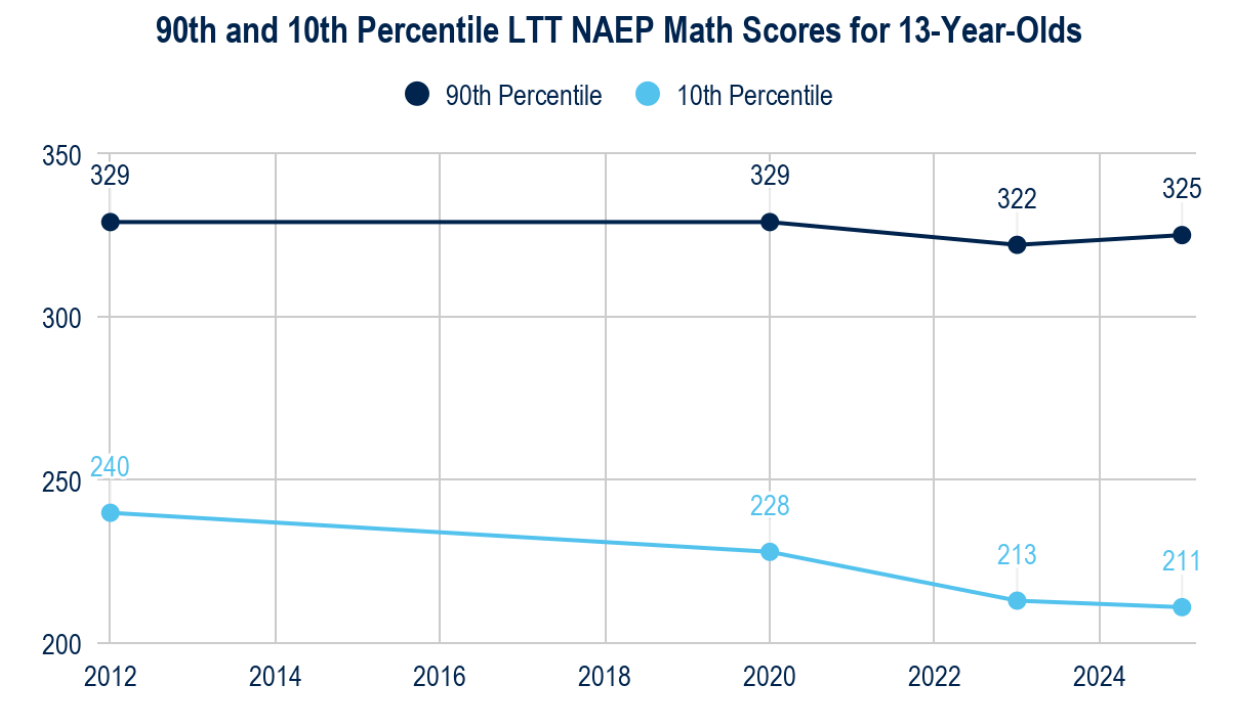
1. The Gap Between the Highest and Lowest Performing Students Continues to widen in Math
In mathematics, the gap between the highest and lowest achieving 13-year-old students continues to widen: 90th percentile students saw a 3 point gain from 2023 to 2025, while 10th percentile students declined 2 points. This trend is consistent with recent iterations of this test as the worst performing students continue to be left behind.
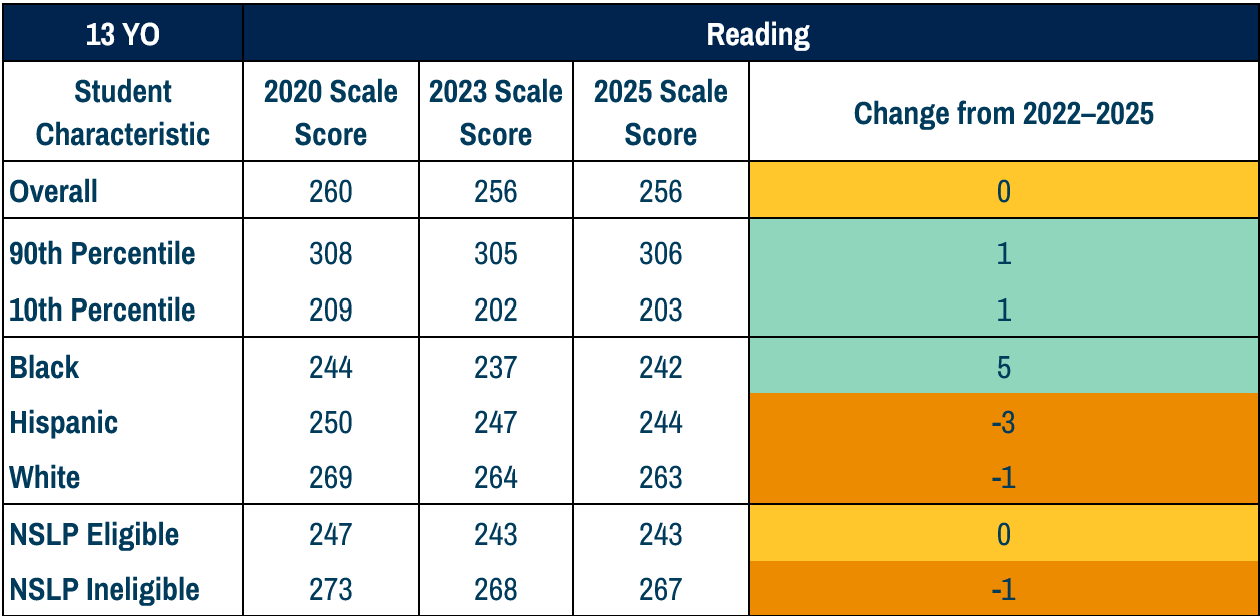
2. Reading Scores Slightly Increase Due to Black Student Gains
In reading, scores for both the highest and lowest performers improved by one point each. Black students drove this gain, seeing an increase of 5 points. However, every other demographic stayed stagnant or declined resulting in average reading scores staying level from 2023 to 2025, ultimately remaining well below pre-pandemic levels.
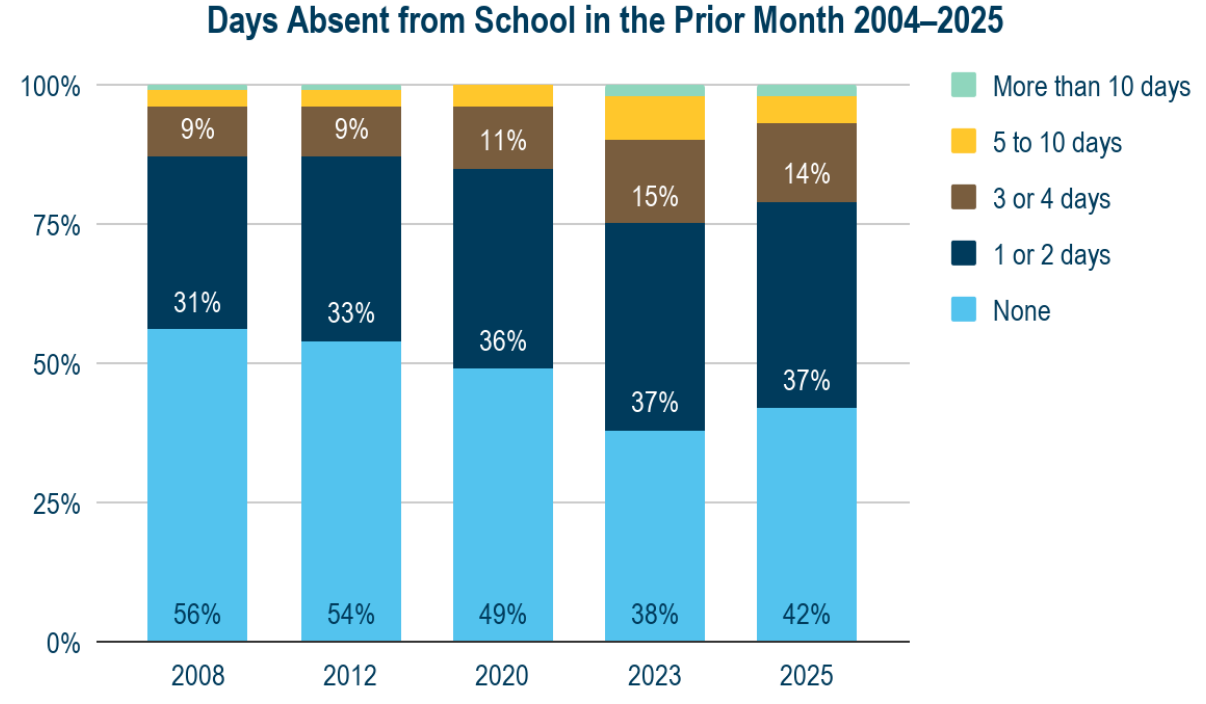
3. 13-Year-Olds Reported Fewer Absences in 2025 Than in 2022, but Still Lag Behind Pre-Pandemic Averages
The share of 13-year-olds reporting no absences rose 4 percentage points from 2023 to 2025, reaching 42 percent. However, this year’s rate is still well below pre-pandemic averages, down 14 percentage points from its peak in 2008.
MORE FROM THE PRiME BLOGS


In 2025, NAEP administered its quadrennial Long-Term Trends Assessment for 9- and 13-year-olds. Today, we are going to be looking at three things we learned about 13-year-olds from the recently released results.