
By : Lucas Koch
In 2025, NAEP administered its quadrennial Long-Term Trends Assessment for 9- and 13-year-olds. Today, we are going to be looking at three things we learned about 9-year-olds from the recently released results. To read a full report analyzing the 2025 results, click here.
1. 9-Year-Olds Rebound From Pandemic-Era Lows
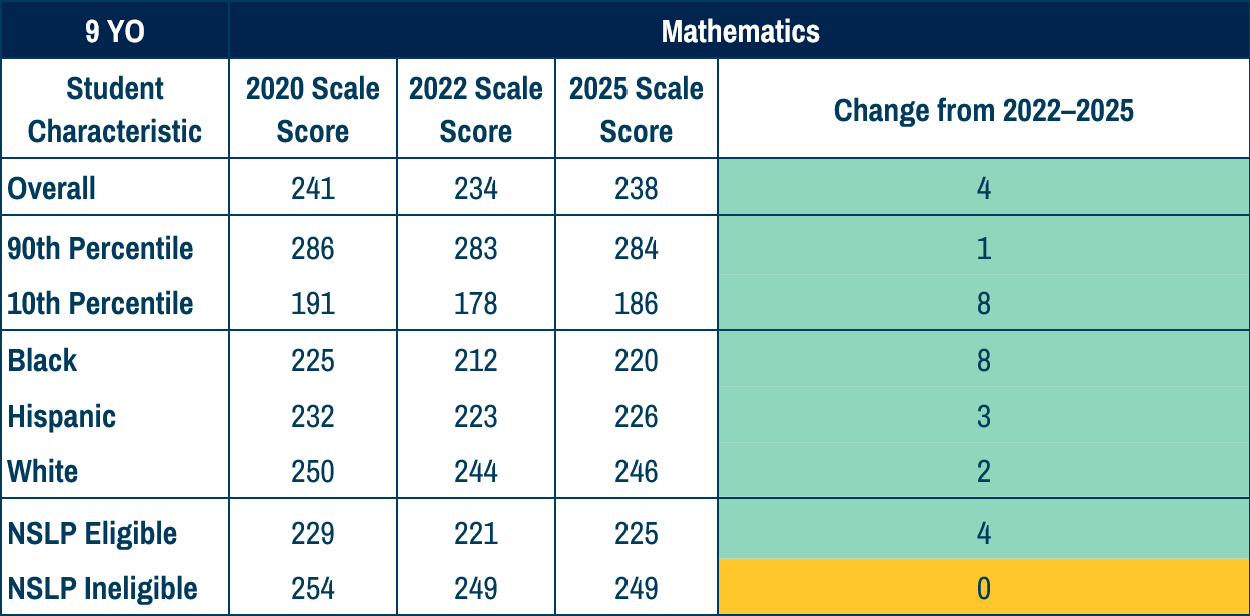
Results for 9-year-old students are encouraging. Scores improved in both math and reading across all demographic subgroups, including 90th percentile, 10th percentile, Black, Hispanic, White, NSLP-eligible, and NSLP-ineligible students, with the largest gains concentrated among 10th percentile students, Black students, and NSLP-eligible students. These results suggest a reversal of pandemic-era trends.
2. 9-Year-Olds Reported Fewer Absences in 2025 Than in 2022
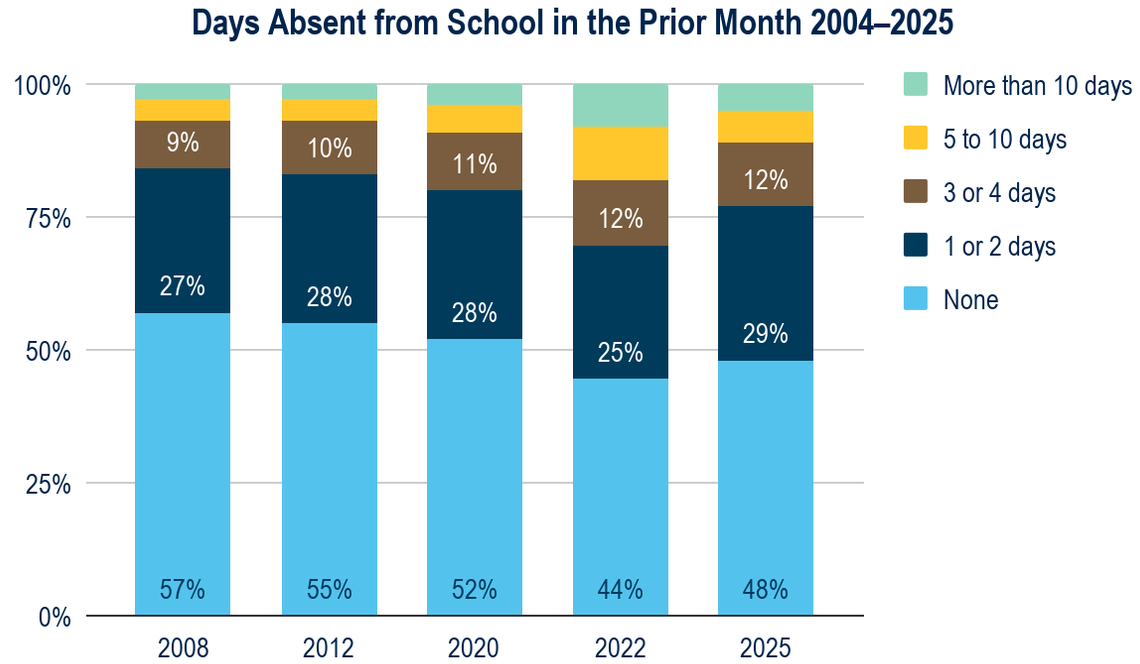
The percentage of 9-year-olds reporting zero missed days of school increased from 44 percent in 2022 to 48 percent in 2025. Students who reported missing no days consistently scored higher than peers who missed even one or two days, offering a partial explanation for the score recovery observed among 9-year-olds between 2022 and 2025.
3. 9-Year-Olds Read for Fun Less Than They Used To
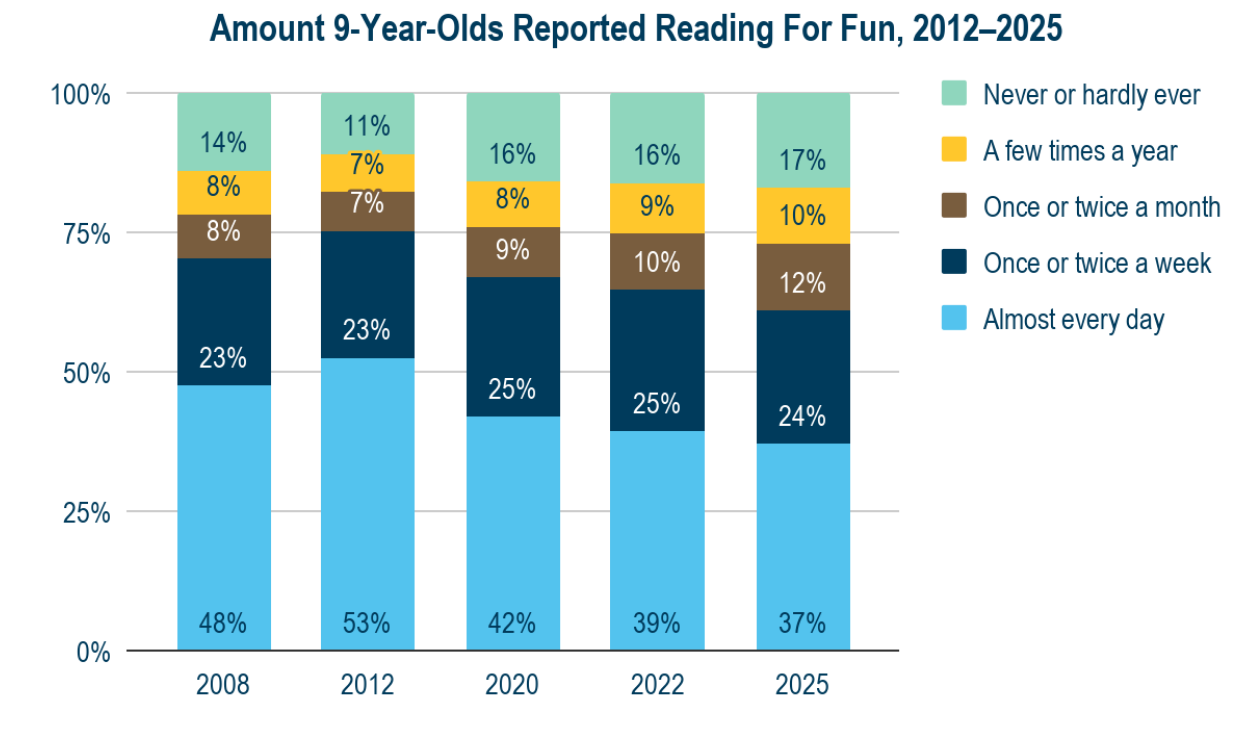
In 2025, only 37 percent of 9-year-olds reported reading for fun almost every day, down from 53 percent in 2012. At the same time, the share of 9-year-olds who report never or hardly ever reading reached an all-time high of 17 percent. Students who report reading for fun almost every day are observed to score significantly higher than those who report reading less frequently, making this a concerning trend.
MORE FROM THE PRiME BLOGS

The PRiME Center at Saint Louis University is excited to welcome back Dr. Stacey Preis as a Senior Fellow.