

UPDATES ON EDUCATION RESEARCH AND POLICY
NEW POSTS WEEKLY!
We want to help lawmakers, educators, and families make decisions about education by providing updates on national, regional and Missouri-specific research. While we strive to be objective, we want to facilitate discussion and will occasionally offer our own views on this blog.

PRiME in the NEWS: Collin Hitt on Funding Gap
PRiME’s Executive Director Collin Hitt and PRiME contributor, Dr. Andrew Camp, spoke on “The Education Gadfly Show” to discuss their new Fordham education report on the Missouri charter school funding gap. The podcast is hosted by co-writer David Griffith and Mike Petrill. The report and podcast focuses on Missouri House Bill 1552 which attempted to close the funding gap between public and charter schools. The podcast examines how funding impacts students, staffing, and student achievement.
PRiME in the NEWS: Collin Hitt on Charter School Funding
PRiME Center’s executive director Dr. Collin Hitt and Dr. David Griffith from Thomas B. Fordham Institute addressed the unsustainable funding model for Missouri’s public schools in a recent op-ed for the Missouri Independent. They highlight the disparity in funding between district public schools and charter public schools. The authors also discuss what solutions could remedy this imbalance.
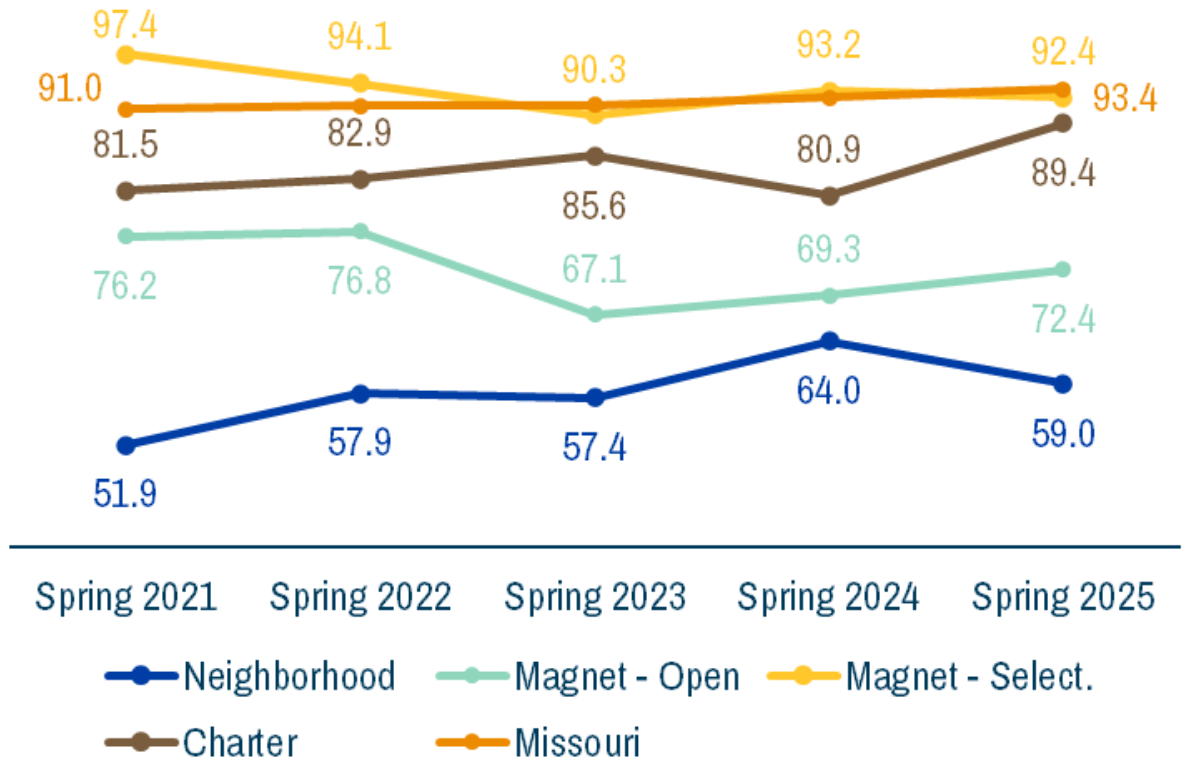
Academic Proficiency and Graduation Rate Trends Across Four Types of Public Schools in St. Louis City
Here we report on the percent of students who are scoring at the proficient or advanced levels in ELA and math, for schools serving elementary and middle-grade students.
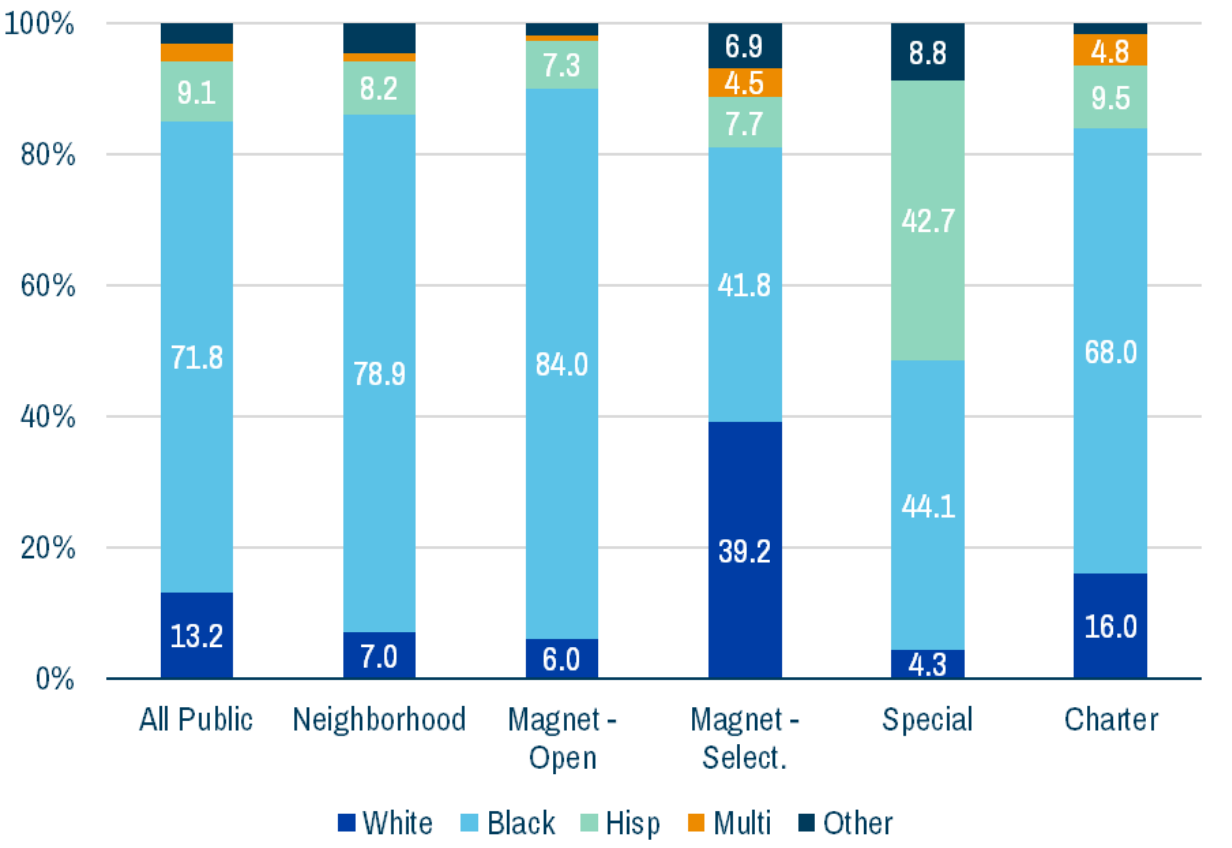
Racial Demographics & Poverty Rates Across Five Types of Public Schools in St. Louis City
In this third blog in a four-part series, we examine demographic trends from fall 2019 through fall 2024 across five types of public schools in St. Louis City.
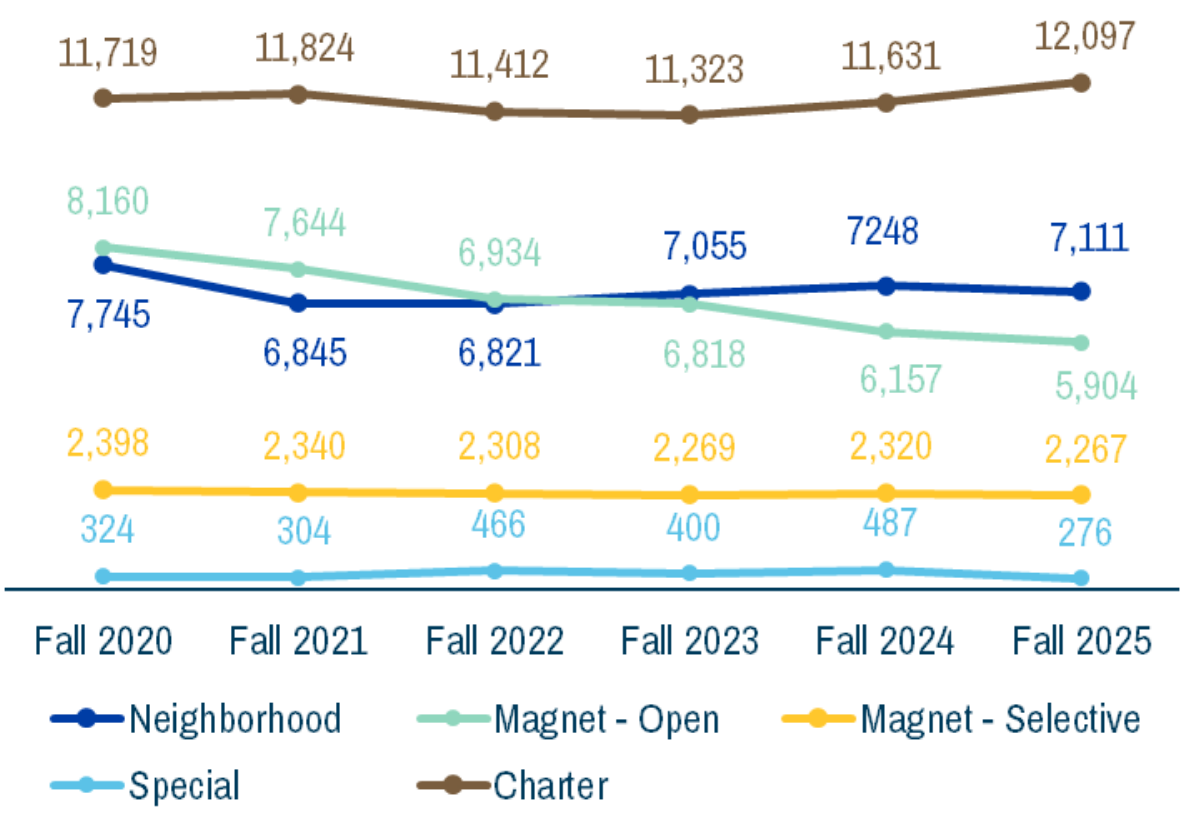
Enrollment Trends Across Five Types of Public Schools in St. Louis City
In this second blog of a four-part series, we examine enrollment trends from fall 2020 through fall 2025 across five types of public schools in St. Louis City
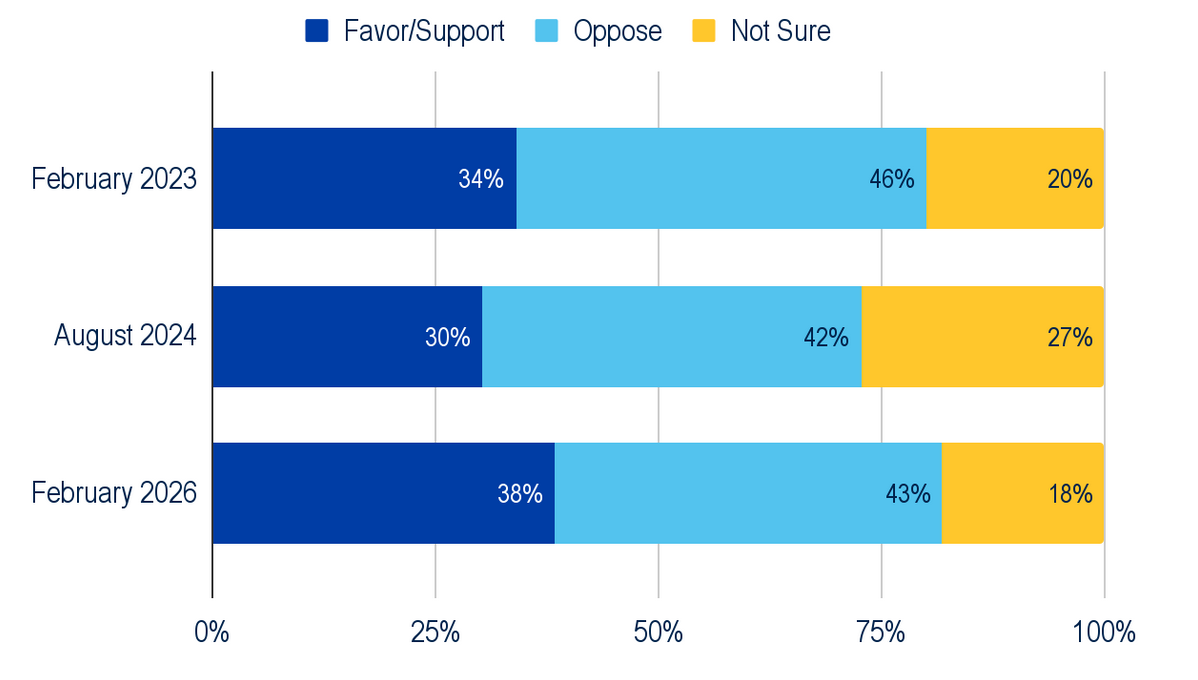
3 Hot Takes: Missouri voters on Four-Day School Weeks, Charter Schools, and School Accountability
Currently, one in three Missouri districts operate on a four-day school week. Policies about four-day school weeks are intended to increase teacher retention. Support for four-day school weeks has slightly increased since February 2023, but has still not reached 50% support.
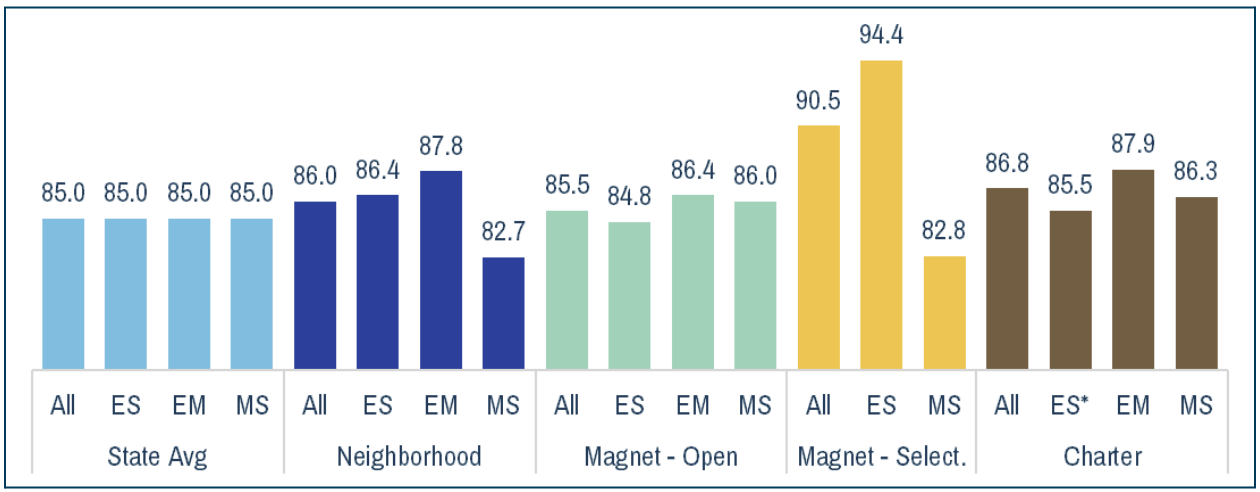
Academic Growth Scores Across Four Types of Public Schools in St. Louis City
In this first blog of a four-part series, we examine average three-year growth scores (from 2022–23, 2023–24, and 2024–25) across four types of public schools in St. Louis City: Saint Louis Public Schools neighborhood schools, SLPS open magnet schools, SLPS selective magnet schools, and public charter schools.

Reflections from a Charter School Trailblazer: Collin Hitt and Kelly Garrett sit down to discuss Garrett’s 14 years of leadership at KIPP St. Louis
Reflections from a Charter School Trailblazer: Collin Hitt and Kelly Garrett sit down to discuss Garrett’s 14 years of leadership at KIPP St. Louis

PRiME in the News: PRiME Growth Scores Featured in STL Magazine
Each year, Missouri gives standardized tests to all public school kids grades 3 through 8 to gauge their proficiency in math and English. In the 2023–2024 school year, only a tenth of KIPP Wonder’s kids who took the tests scored “proficient” in English. That’s 31 points below the state average. But it’s just a snapshot—and, in large part, due to factors outside any school’s control, such as community and family resources. Missouri also calculates a growth metric, one that Collin Hitt, the executive director of Saint Louis University’s education policy group, PRiME Center, calls “the best in the country.” It asks the question: How far did students move forward in a subject, regardless of where they started, and in comparison to other similarly situated students? And on that metric, KIPP Wonder showed the second largest average leap in English of all public elementary schools in Missouri, according to a PRiME analysis. (They were second only to a school in the Ozarks.)

Charter Schools: Public Opinion in Missouri
Missouri is home to 37 Charter Local Education Agencies (LEAs)—20 in Kansas City and 17 in St. Louis. In 2024, Missouri charter schools educated around 25,000 students. Charter schools are public schools, free from tuition and fees, that operate in the St. Louis and Kansas City areas of Missouri. Charter schools are sponsored or “authorized” not by the state, but rather by an entity that grants a charter and provides accountability. There are currently seven charter school sponsors in Missouri—Saint Louis University is one of them. More information about Missouri charter schools can be found at https://dese.mo.gov/quality-schools/charter-schools.