
PRiME In The News: “Are Missouri Students Growing?”
Published On: February 12, 2026
Each December, the Missouri Department of Elementary and Secondary Education (DESE) releases standardized testing results from the previous school year. Behind the scenes, the PRiME Center gets to work crunching the numbers to highlight the schools across the state demonstrating the highest growth in math and English language arts during the previous school year. Offering an alternative narrative to proficiency, growth accounts for where students start the year and determines how much progress they’ve made.
Dr. Vahle in her op-ed for the Missouri Independent:
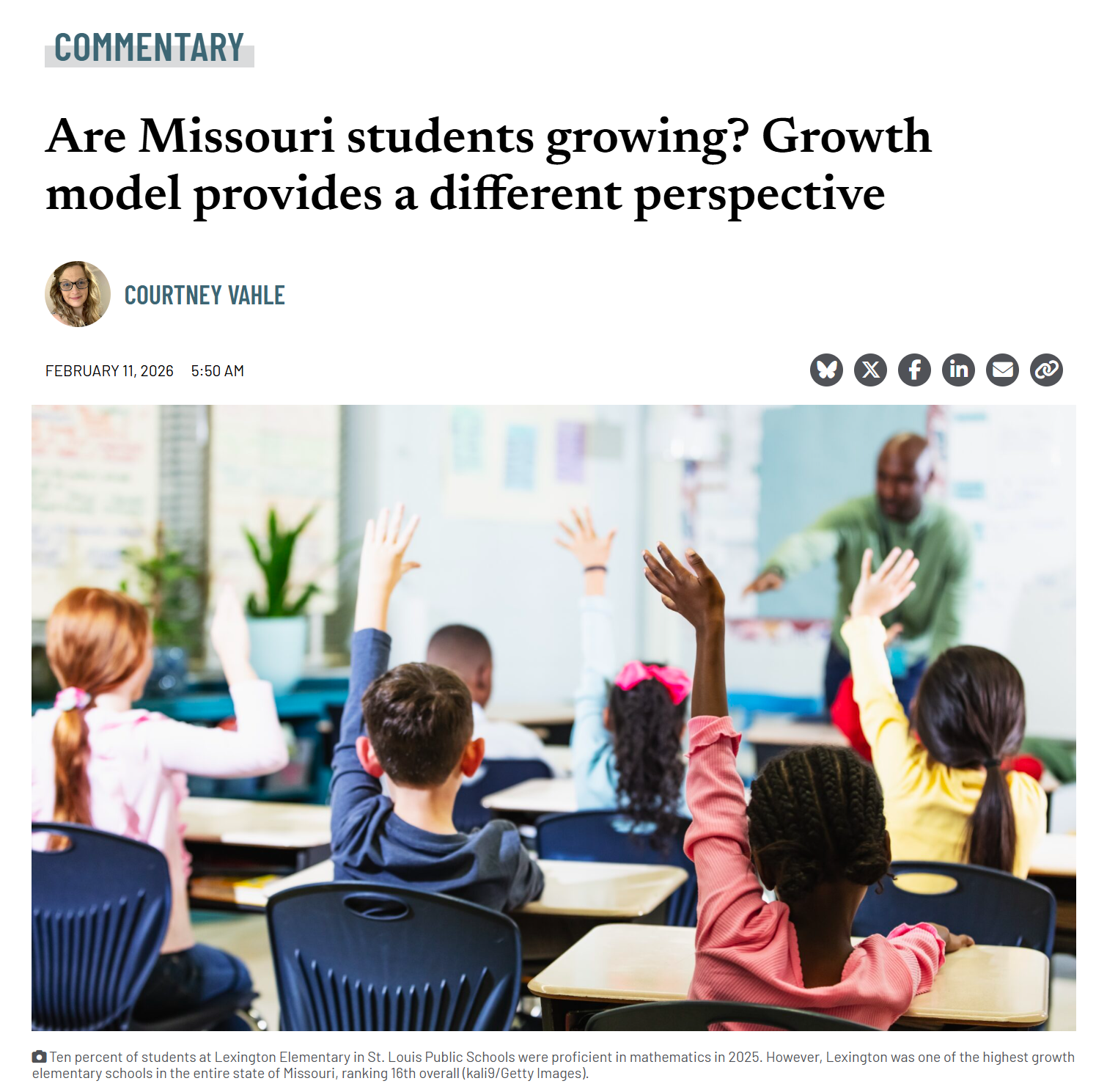
Less than half of students in Missouri are proficient in math or English language arts. But what if we’re looking at the numbers all wrong? What if proficiency isn’t the best measurement of student progress? What we really want to know is if students are growing from year to year, and by how much. No one takes their child to the pediatrician for their annual physical and measures a child’s growth based on how tall they’ve grown since birth. Likewise, we should gauge student progress by assessing their improvement from one school year to the next.
MORE FROM THE PRiME BLOGS


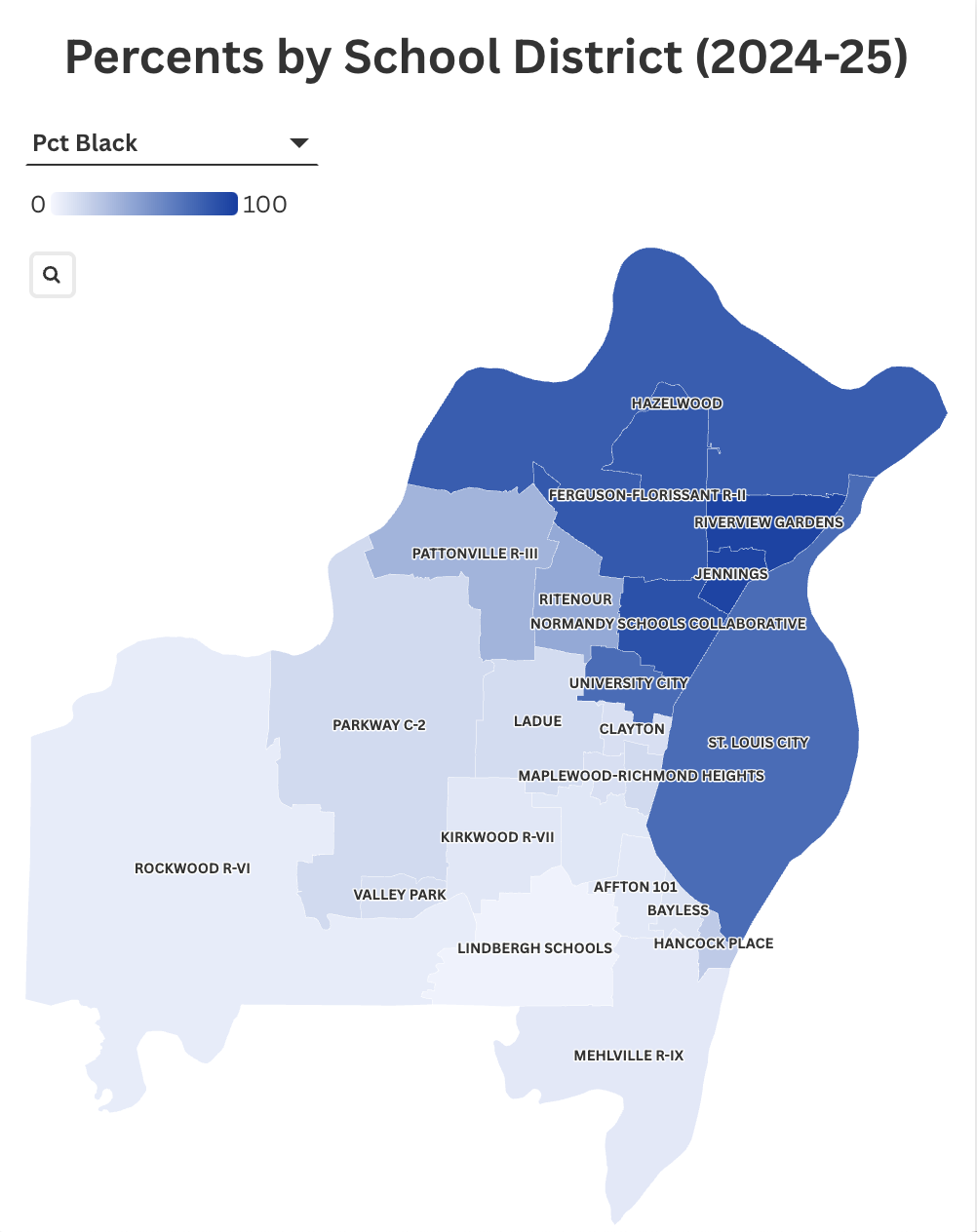
St. Louis County, Missouri is divided into 22 regular school districts that vary widely in geographic size and student enrollment, from 668 students in Valley Park to 18,595 students in Rockwood R-6 (2025–26). Student demographics and funding also differ starkly across districts. Lindbergh serves a population that is 2.7% Black, while the student population in Riverview Gardens is 96.5% Black (2024–25). And while Jennings and Clayton both serve just over 2,000 students, Jennings had $8,731 to spend per student in 2024–25, while Clayton spent $24,862. What explains the number of districts and the disparities between them?