
Which schools in Missouri are the best?
By : Courtney Vahle
Parents, policymakers, and educators often ask the same question: What makes a good school? And how do you determine which schools are the “best?”
Conventional wisdom holds that the “best” schools are the ones with the highest scores or proficiency rates on standardized tests. But here at the PRiME Center, we know there’s a better way.
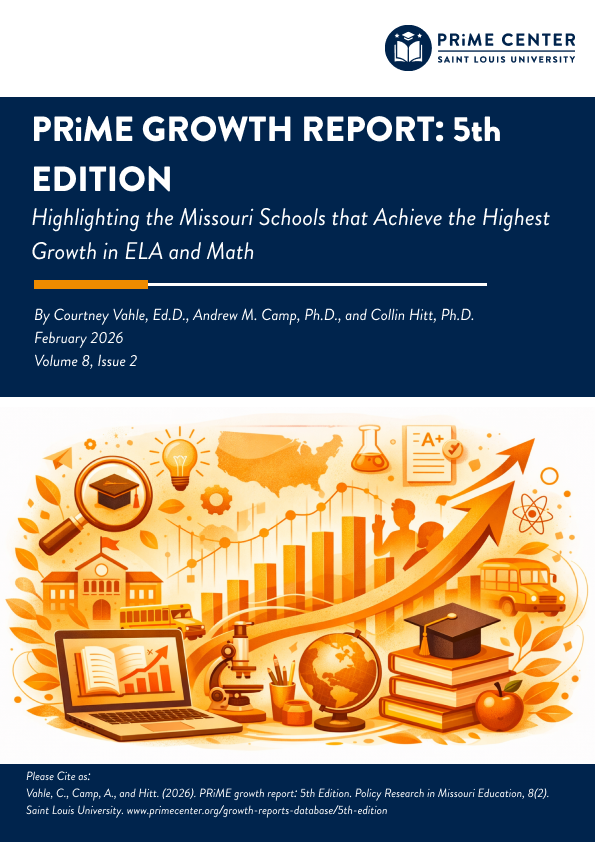
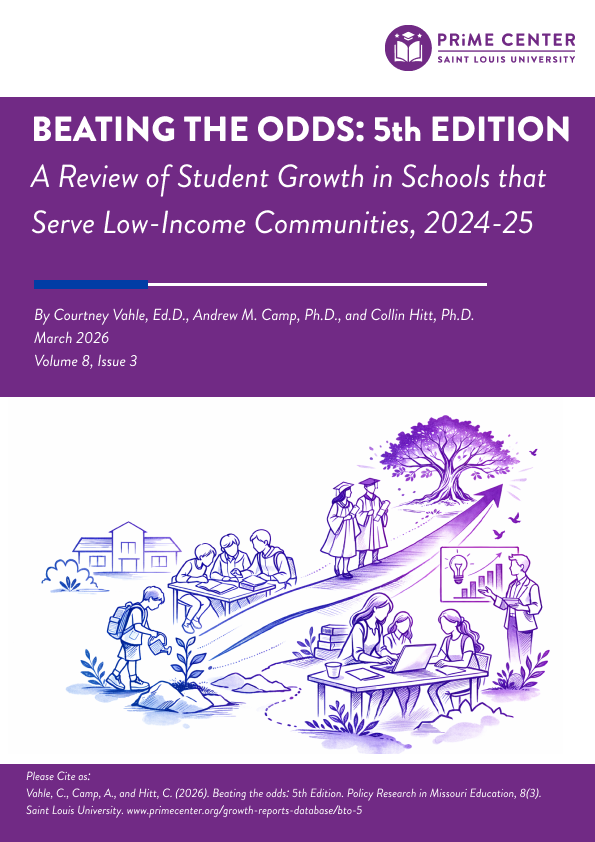
That’s why we’re excited to present the fifth edition of the PRiME Center’s signature reports: The Growth Report and Beating the Odds.
Both of these reports rate schools according to the progress students made from one school year to the next.
Many of the schools ranked in the Top 20 lists are considered “low performing” when measured according to proficiency rates or average standardized test scores. But those scores don’t tell the whole story because they are biased against schools with high populations of students living in poverty, students who are homeless, English language learners, or students with special needs.
Thus, we present two reports. “The Growth Report” considers the performance of all 1,652 schools in the state educating children in grades 4-8. “Beating the Odds” considers only those schools serving the highest percentage of students living in poverty.
Together, the rankings in these reports illustrate how important it is to consider the progress that students can make in a single school year, even in the face of challenging circumstances.
To see growth scores for your school, or any school across the state, view our data dashboard and dataset at primecenter.org/growth.
Published March 17, 2026
MORE FROM THE PRiME BLOGS

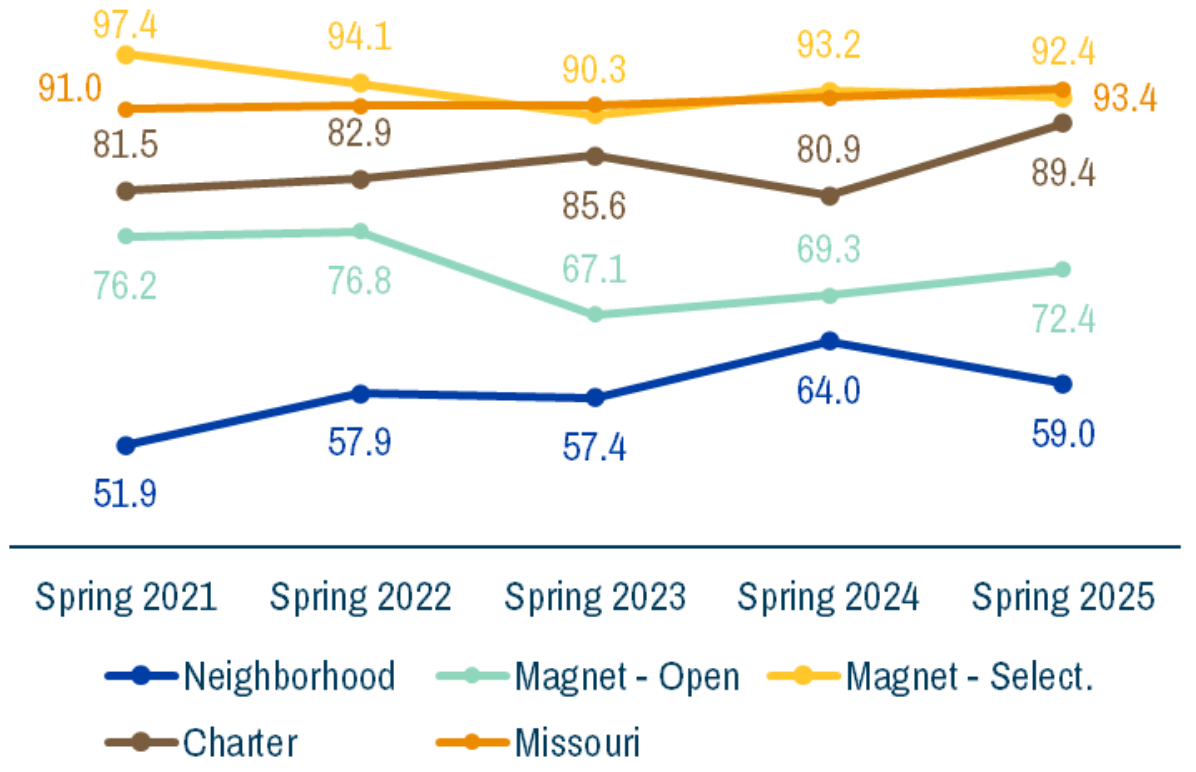
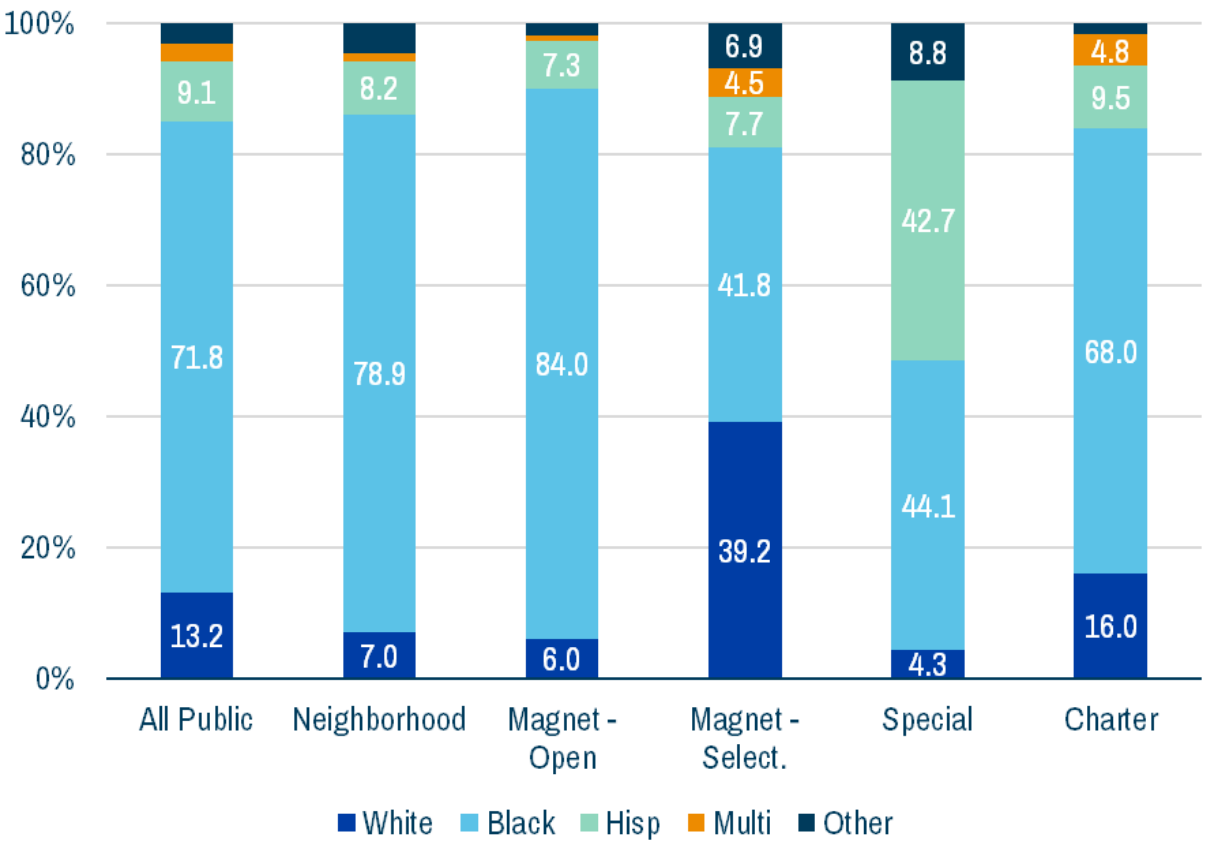
As Missouri students start a new school year, many will find familiar faces missing from the front of the classroom. This is because teacher turnover in the state remains stubbornly high – more than twice the national average.
Teacher turnover in Missouri is at 14.6 percent, according to research from the PRiME Center. Meanwhile, the national average is roughly 7 percent.