

UPDATES ON EDUCATION RESEARCH AND POLICY
NEW POSTS WEEKLY!
We want to help lawmakers, educators, and families make decisions about education by providing updates on national, regional and Missouri-specific research. While we strive to be objective, we want to facilitate discussion and will occasionally offer our own views on this blog.
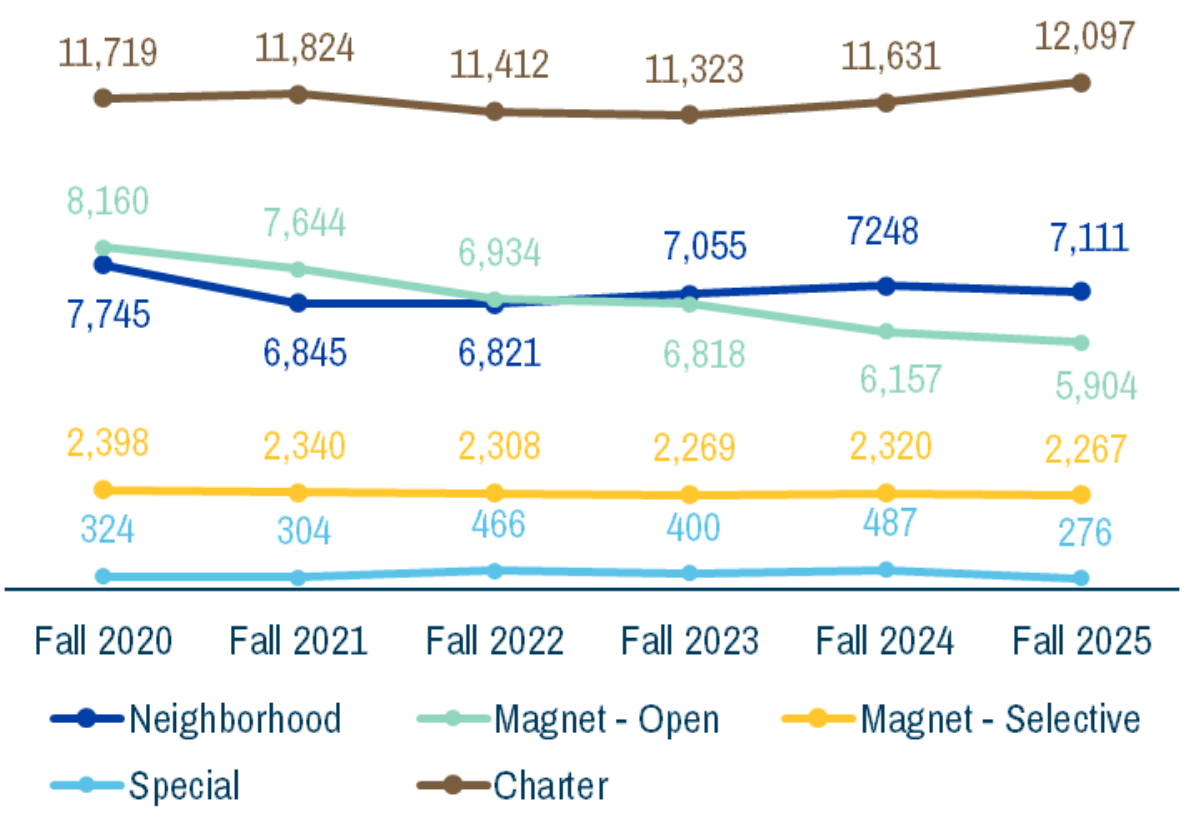
Enrollment Trends Across Five Types of Public Schools in St. Louis City
In this second blog of a four-part series, we examine enrollment trends from fall 2020 through fall 2025 across five types of public schools in St. Louis City
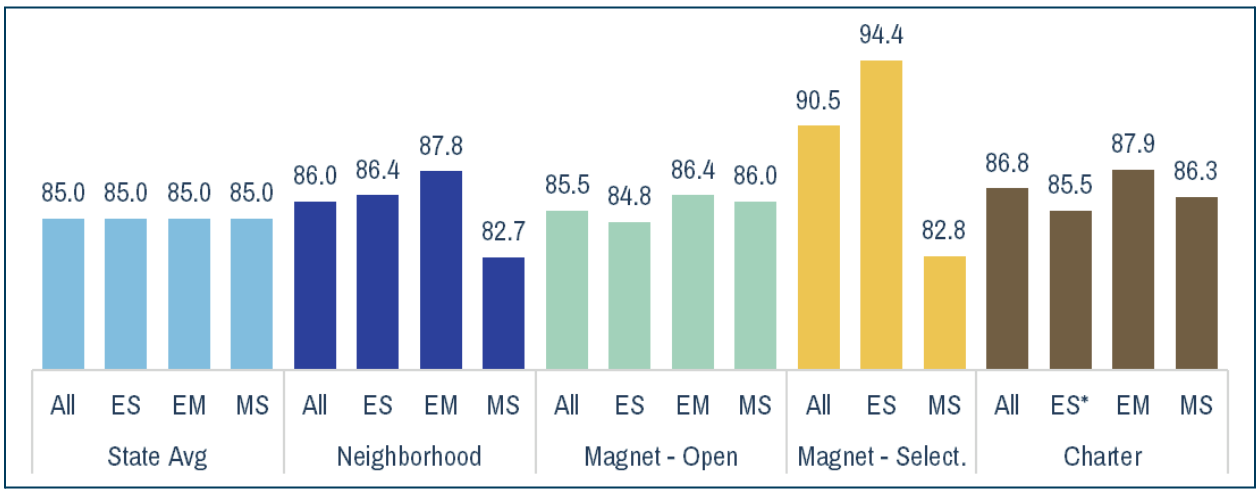
Academic Growth Scores Across Four Types of Public Schools in St. Louis City
In this first blog of a four-part series, we examine average three-year growth scores (from 2022–23, 2023–24, and 2024–25) across four types of public schools in St. Louis City: Saint Louis Public Schools neighborhood schools, SLPS open magnet schools, SLPS selective magnet schools, and public charter schools.

Reflections from a Charter School Trailblazer: Collin Hitt and Kelly Garrett sit down to discuss Garrett’s 14 years of leadership at KIPP St. Louis
Reflections from a Charter School Trailblazer: Collin Hitt and Kelly Garrett sit down to discuss Garrett’s 14 years of leadership at KIPP St. Louis

PRiME in the NEWS: Courtney Vahle “We need to rethink school start times in Missouri'“
In the fall of 2024, PRiME’s Director of Operations, Dr. Courtney Vahle (With co-author, Paul Wunnenberg) took a deep dive into high school start times across Missouri. After compiling a first-of-its-kind, comprehensive dataset of Missouri high school start times, containing 295 high schools from 230 school districts across the state, the authors found that the Missouri statewide average start time, 7:48 AM, is a full 42 minutes earlier than the American Academy of Pediatrics (AAP) recommends.

Head Count: Enrollment over Time across Missouri, KC Metro and STL Metro
Over the last decade, charter schools in Kansas City and St. Louis metro areas have grown, while traditional public school enrollment has generally declined. However, preliminary data for the 2024-25 school year suggests that some of these trends may be shifting.